
2026 Golf Pricing List
Category | Weekday Price (NT$) | Holiday Price (NT$) |
|---|---|---|
Individual & Family Member | 1,870 | 1,870 |
Group Member | 2,620 | 2,620 |
Member Guest | 3,000 | 3,355 |
Team (20+ players) | 3,400 (with meal) / 3,650 (without meal) | 3,850 (with meal) / 4,300 (without meal) |
General Guest | 4,000 | 4,700 |
II. Special Promotional Offers
III. 2026 Golf Vacation (Accommodation Package)
IV. Course Strategy and Hole Introduction (Score Card)
HOLE NO. | 1 | 2 | 3 | 4 | 5 | 6 | 7 | 8 | 9 | OUT |
|---|---|---|---|---|---|---|---|---|---|---|
PAR | 4 | 4 | 5 | 4 | 3 | 4 | 5 | 3 | 4 | 36 |
BLUE | 414 | 391 | 564 | 411 | 178 | 447 | 555 | 180 | 380 | 3520 |
White | 393 | 381 | 518 | 387 | 161 | 428 | 525 | 178 | 362 | 3333 |
RED | 338 | 301 | 440 | 332 | 125 | 368 | 455 | 155 | 312 | 2826 |
HDCP | 17 | 11 | 9 | 5 | 13 | 1 | 3 | 15 | 7 |
HOLE NO. | 1 | 2 | 3 | 4 | 5 |
|---|---|---|---|---|---|
PAR | 4 | 4 | 5 | 4 | 3 |
BLUE | 414 | 391 | 564 | 411 | 178 |
White | 393 | 381 | 518 | 387 | 161 |
RED | 338 | 301 | 440 | 332 | 125 |
HDCP | 17 | 11 | 9 | 5 | 13 |
HOLE NO. | 6 | 7 | 8 | 9 | OUT |
|---|---|---|---|---|---|
PAR | 4 | 5 | 3 | 4 | 36 |
BLUE | 447 | 555 | 180 | 380 | 3520 |
White | 428 | 525 | 178 | 362 | 3333 |
RED | 368 | 455 | 155 | 312 | 2826 |
HDCP | 1 | 3 | 15 | 7 |
HOLE NO. | 10 | 11 | 12 | 13 | 14 | 15 | 16 | 17 | 18 | IN | TOTAL |
|---|---|---|---|---|---|---|---|---|---|---|---|
PAR | 4 | 3 | 4 | 5 | 3 | 4 | 5 | 4 | 4 | 36 | 72 |
BLUE | 380 | 185 | 403 | 502 | 226 | 482 | 523 | 486 | 396 | 3583 | 7103 |
White | 338 | 168 | 376 | 479 | 206 | 426 | 494 | 447 | 382 | 3316 | 6149 |
RED | 316 | 132 | 303 | 425 | 119 | 340 | 468 | 318 | 302 | 2723 | 5549 |
HDCP | 18 | 16 | 12 | 10 | 14 | 2 | 4 | 6 | 8 |
HOLE NO. | 10 | 11 | 12 | 13 | 14 |
|---|---|---|---|---|---|
PAR | 4 | 3 | 4 | 5 | 3 |
BLUE | 380 | 185 | 403 | 502 | 226 |
White | 338 | 168 | 376 | 479 | 206 |
RED | 316 | 132 | 303 | 425 | 119 |
HDCP | 18 | 16 | 12 | 10 | 14 |
HOLE NO. | 15 | 16 | 17 | 18 | IN | TOTAL |
|---|---|---|---|---|---|---|
PAR | 4 | 5 | 4 | 4 | 36 | 72 |
BLUE | 482 | 523 | 486 | 396 | 3583 | 7103 |
White | 426 | 494 | 447 | 382 | 3316 | 6149 |
RED | 340 | 468 | 318 | 302 | 2723 | 5549 |
HDCP | 2 | 4 | 6 | 8 |
Golf Course Introduction / 18-Hole Map Page
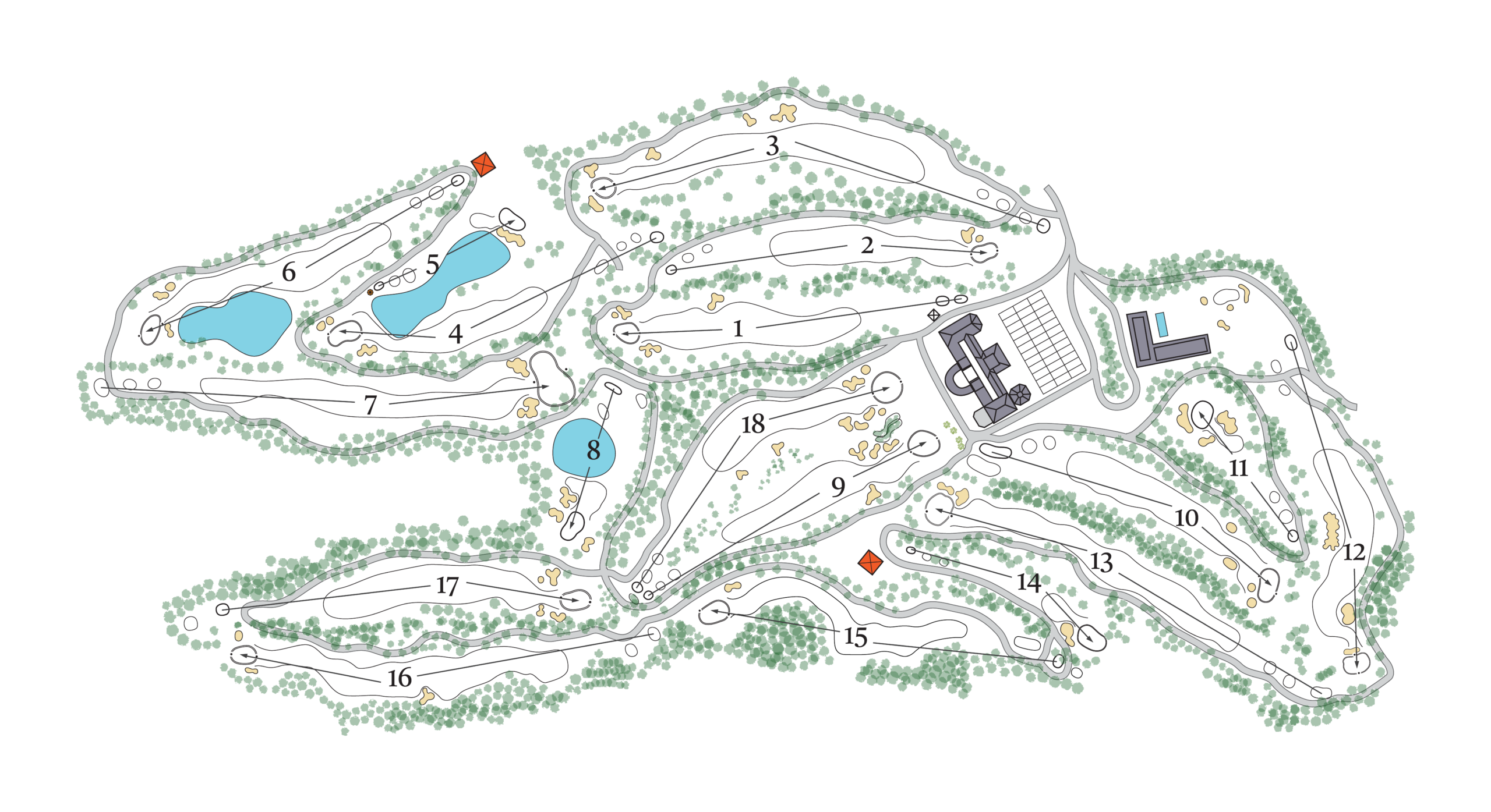
National Garden Country Club boasts a professional-grade golf course set in a lush garden landscape. Covering an area of 115 hectares, it offers expansive views and a pleasant scenery. The 18-hole course measures 7,014 yards with a par of 72, fully showcasing the scale and challenge of international tournament venues.
Winding yet grand fairway design allows golfers to enjoy a smooth rhythm and expansive shot routes with each swing. In recent years, the course has fully adopted the Champion Dwarf Bermudagrass, the official grass of international professional tours, replacing the original green grass. Its green speed performance rivals that of European and American tour standards, providing a more delicate, faster, and purer putting experience.
Whether you are a golfer who loves precise shots or a player seeking a high-level competition experience, all courses nationwide are built to standards closely resembling professional tournament venues, ensuring every golfer on the green can enjoy an unprecedented sensory feast and the joy of swinging.
Fairway Strategy
No.1
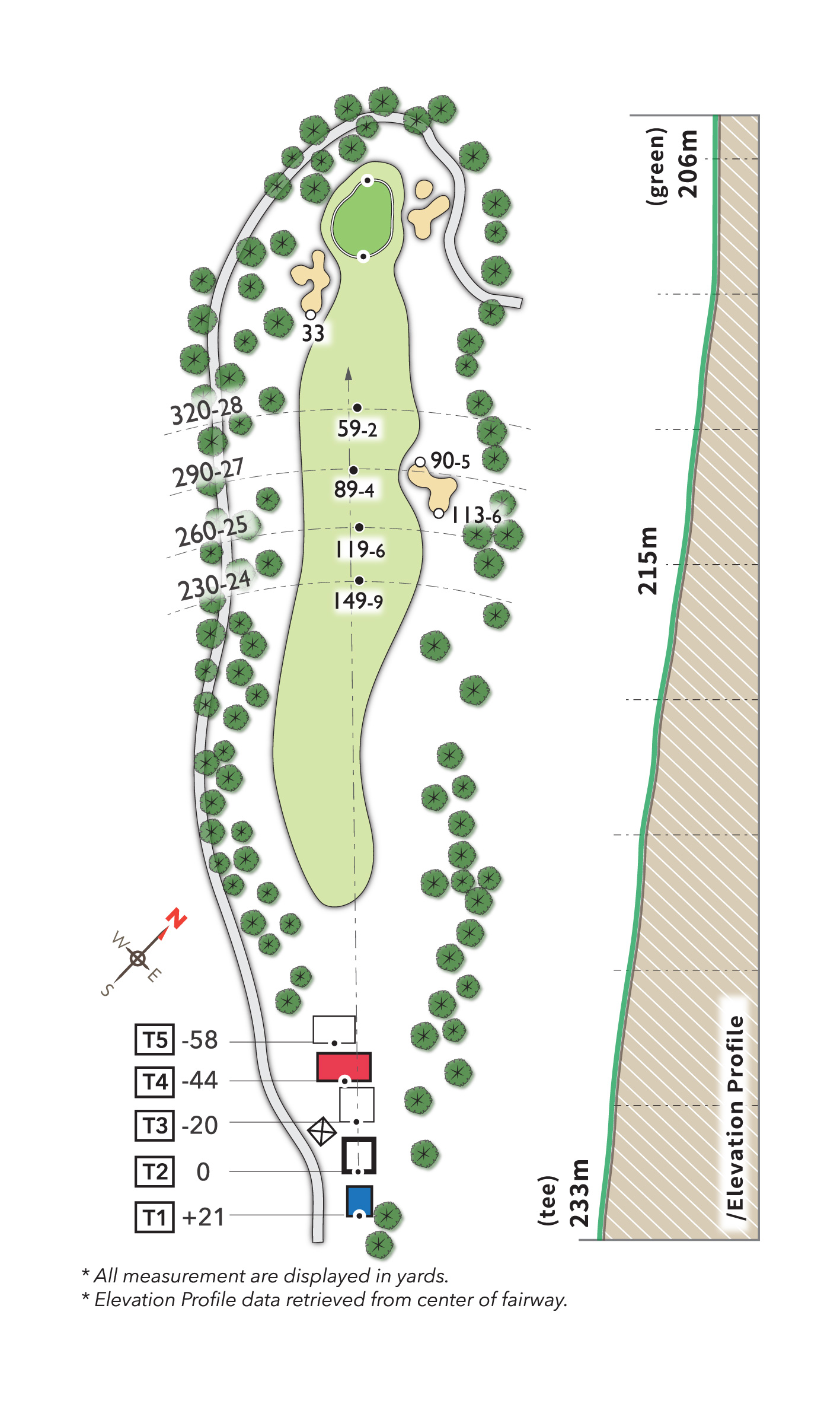
This is an almost straight, stepped downhill par four hole. Standing on the white tee, there is only one bunker 272 yards on the right side. From the same distance, if you aim to the left half of the fairway, the second shot will land on a platform about 100 yards away. For the second shot, it’s better to hit short rather than too long, especially avoiding the left side of the green, which is a critical hazard and the most forbidden zone on this hole.
No.2
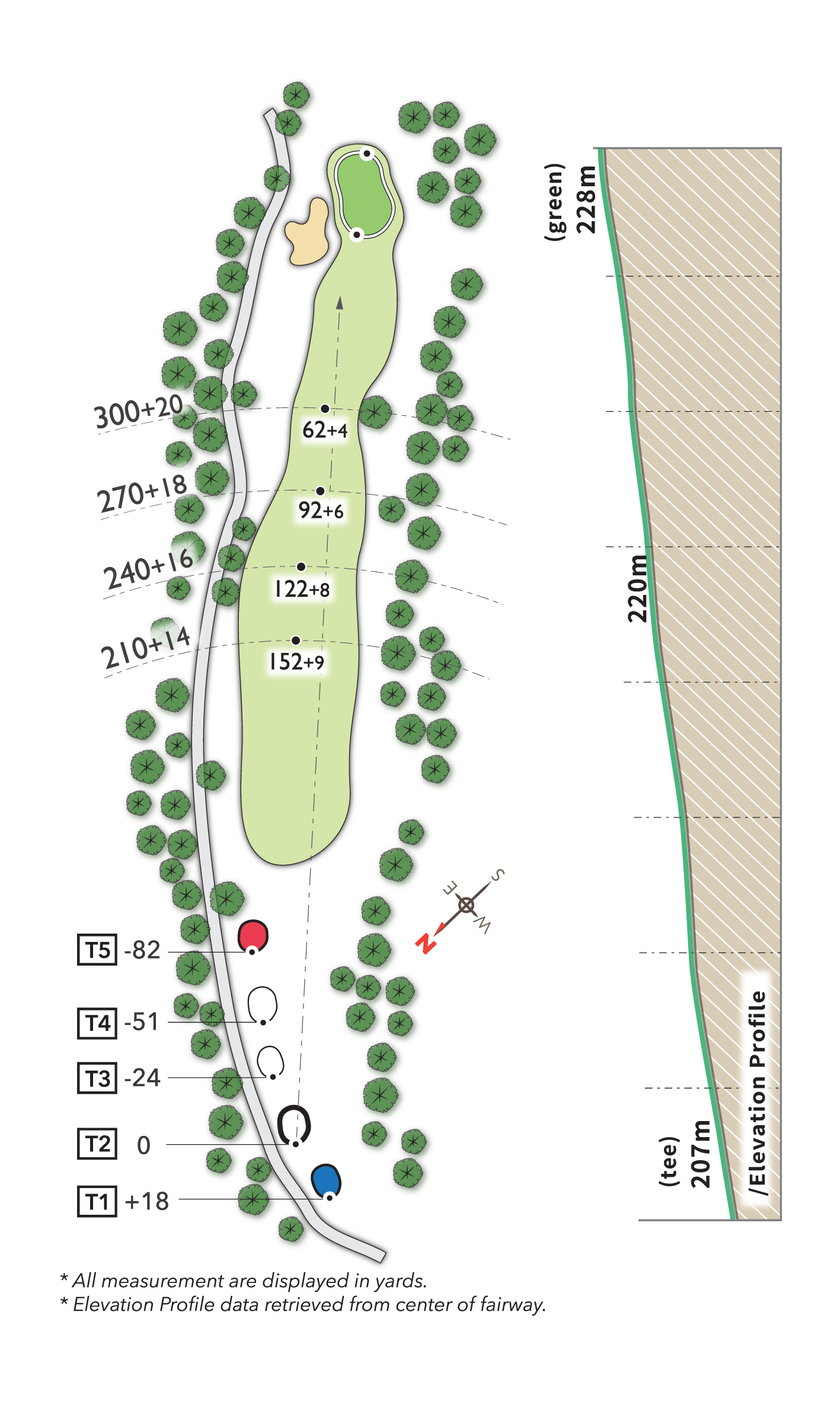
Opposite in direction to the first hole, this is an uphill par four. The fairway slopes from right high to left low. It is recommended to tee off on the right half for a better approach angle to the green. If the tee shot lands on the left side, it’s not a big problem; the second shot is about 100 yards. The green is elevated, so adding about 10 yards to the shot distance can help, and a direct approach to the flag makes it easier to stop on the green.
No.3
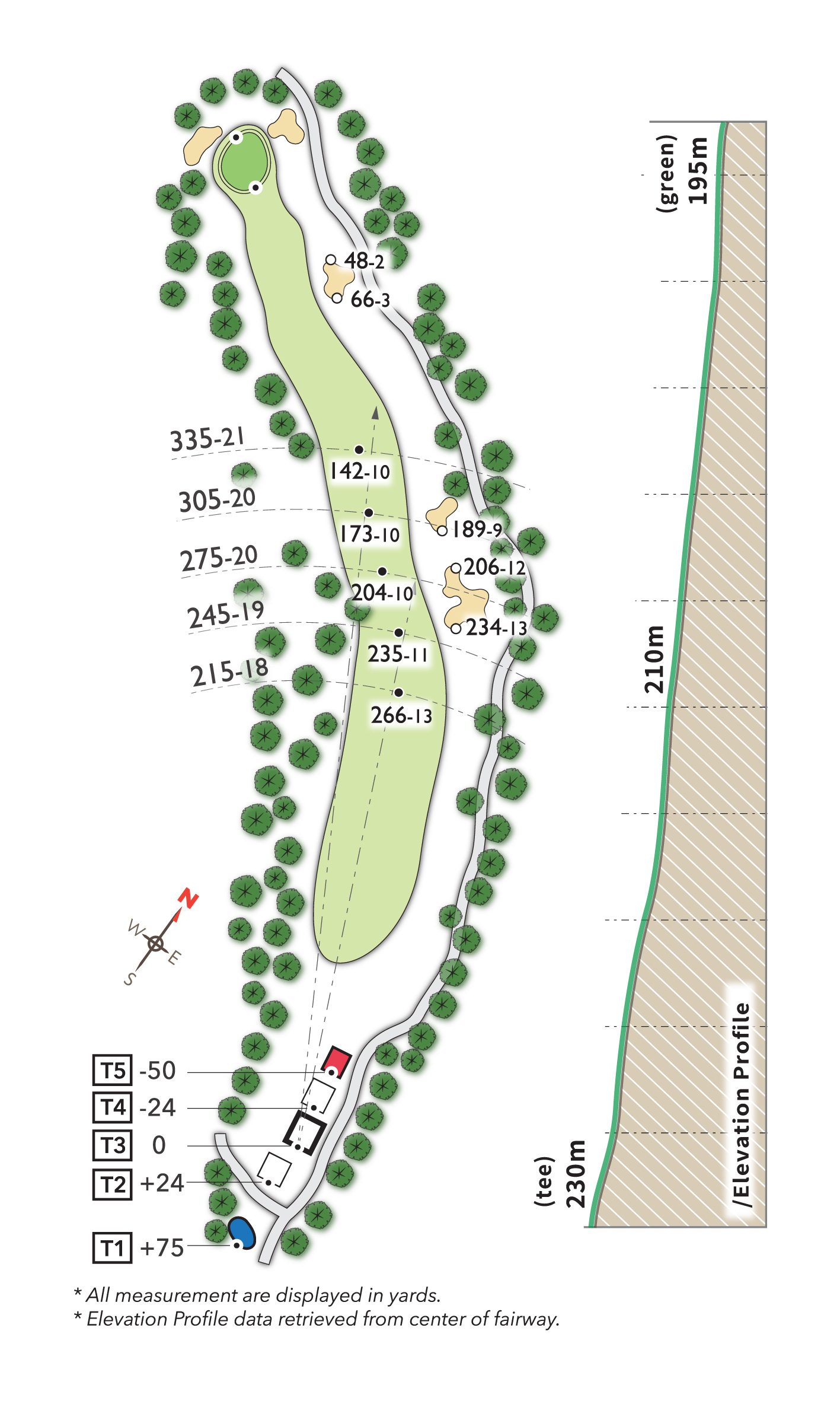
A short five-par hole with a left turn. The tee shot can be aimed toward the left corner, using a straight or slight left curve shot. The second shot is about 230 yards downhill toward the elevated green. It is recommended to use a hybrid or 3-wood to land the ball before the green and bounce forward. Even if it doesn’t land directly on the green, it leaves an angle for an up-and-down shot, offering a good chance for a birdie.
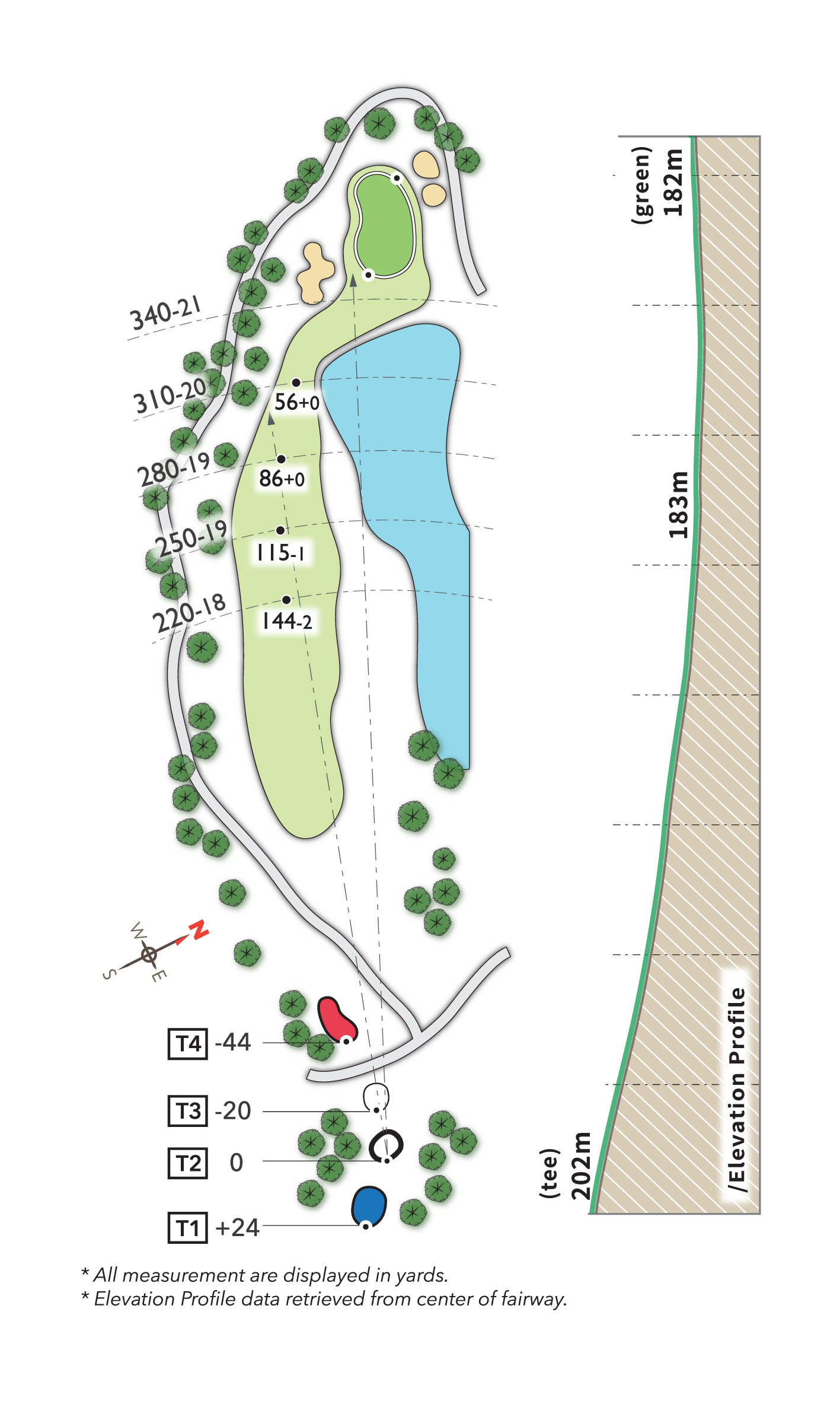
No.4
A short four-par hole with a large water hazard on the right side. The tee shot should be controlled around 230 yards, aiming for the left half of the fairway to achieve a better approach angle to the green. The second shot is about 120 yards. The right side of the green is higher, so when approaching the green, the ball should be placed on the lower left side for more stability. If the flag is in front, you can go directly for it; if behind, then
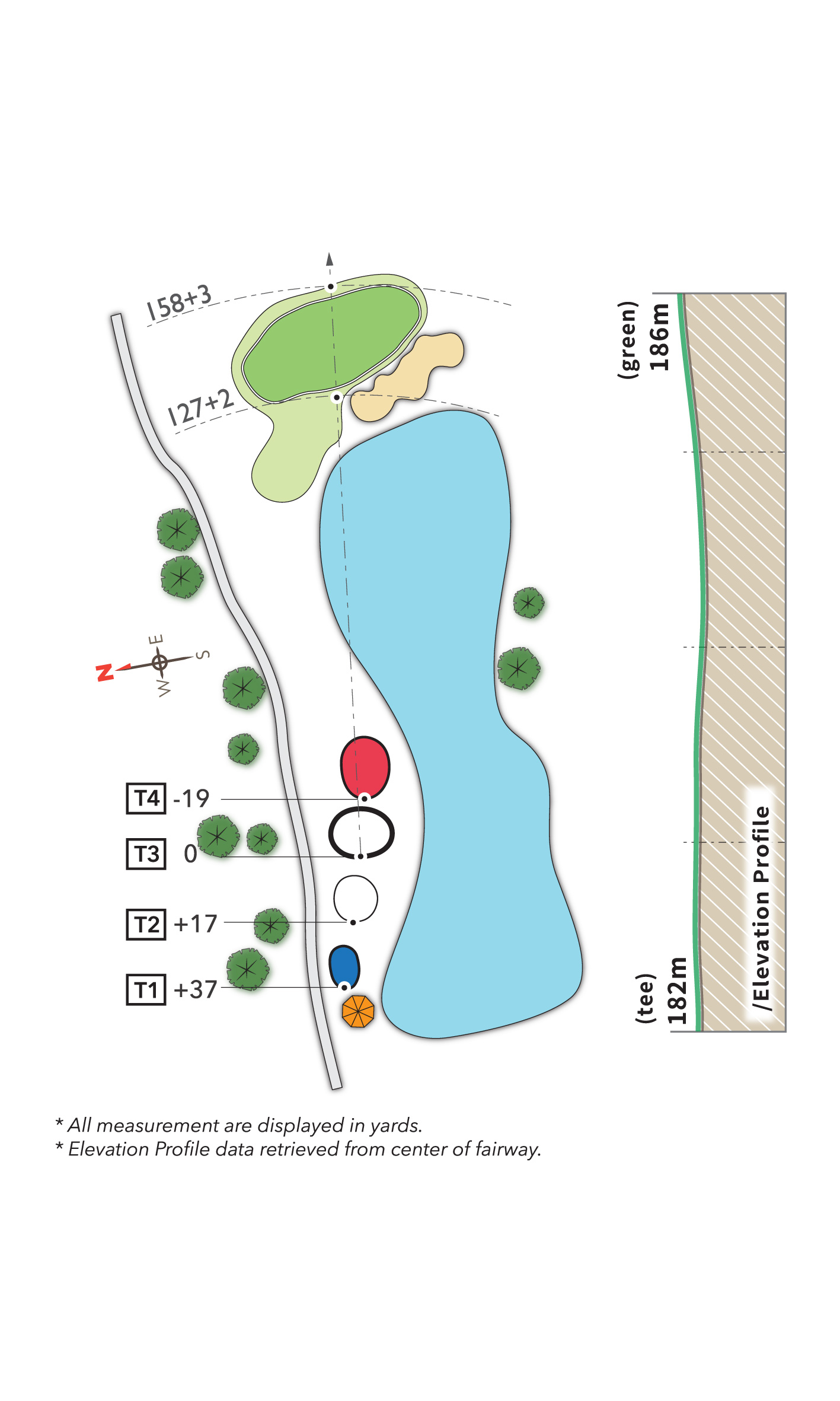
No.5
This is a short hole crossing a large water pond, with a flat and elongated green that is higher at the back and lower at the front. There is a water hazard on the front right. This hole often faces crosswind; on days with stronger wind, you may need to add about 10–15 yards. If there is no wind, hit the original distance, but strategically, it’s better to play short rather than over the flagstick.
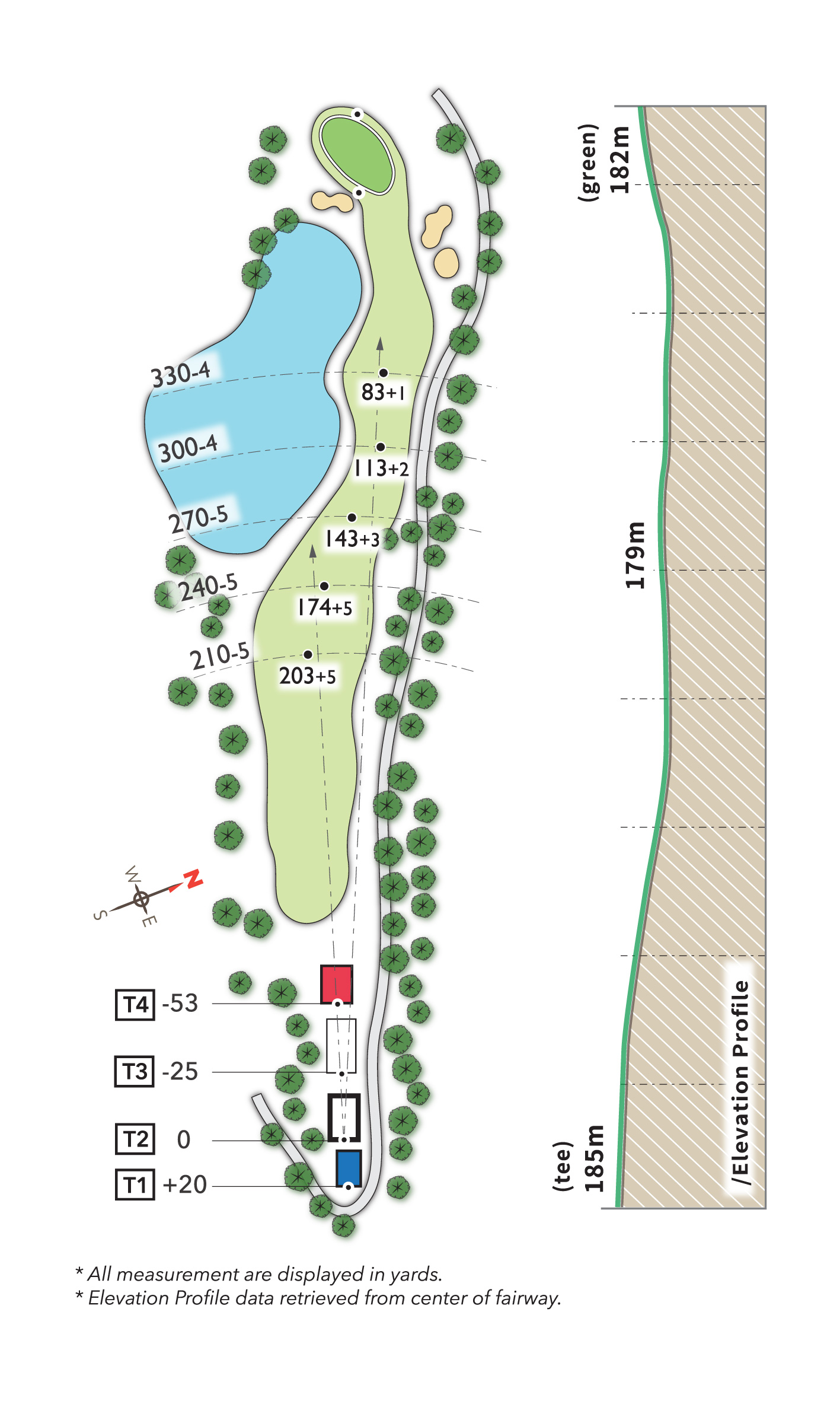
No.6
A four-par hole with higher risk off the tee, with a water hazard about 260 yards left of the fairway. For the tee shot, use a long iron or hybrid, aiming for the left half of the fairway, stopping just before the water hazard on the platform. The second shot is approximately 170 yards remaining. The green is elevated, and you can aim to add about 5–10 yards when attacking. As long as the distance is enough to clear the front-left bunker, it’s good. For a three-shot approach, leave about 100 yards for the third shot.
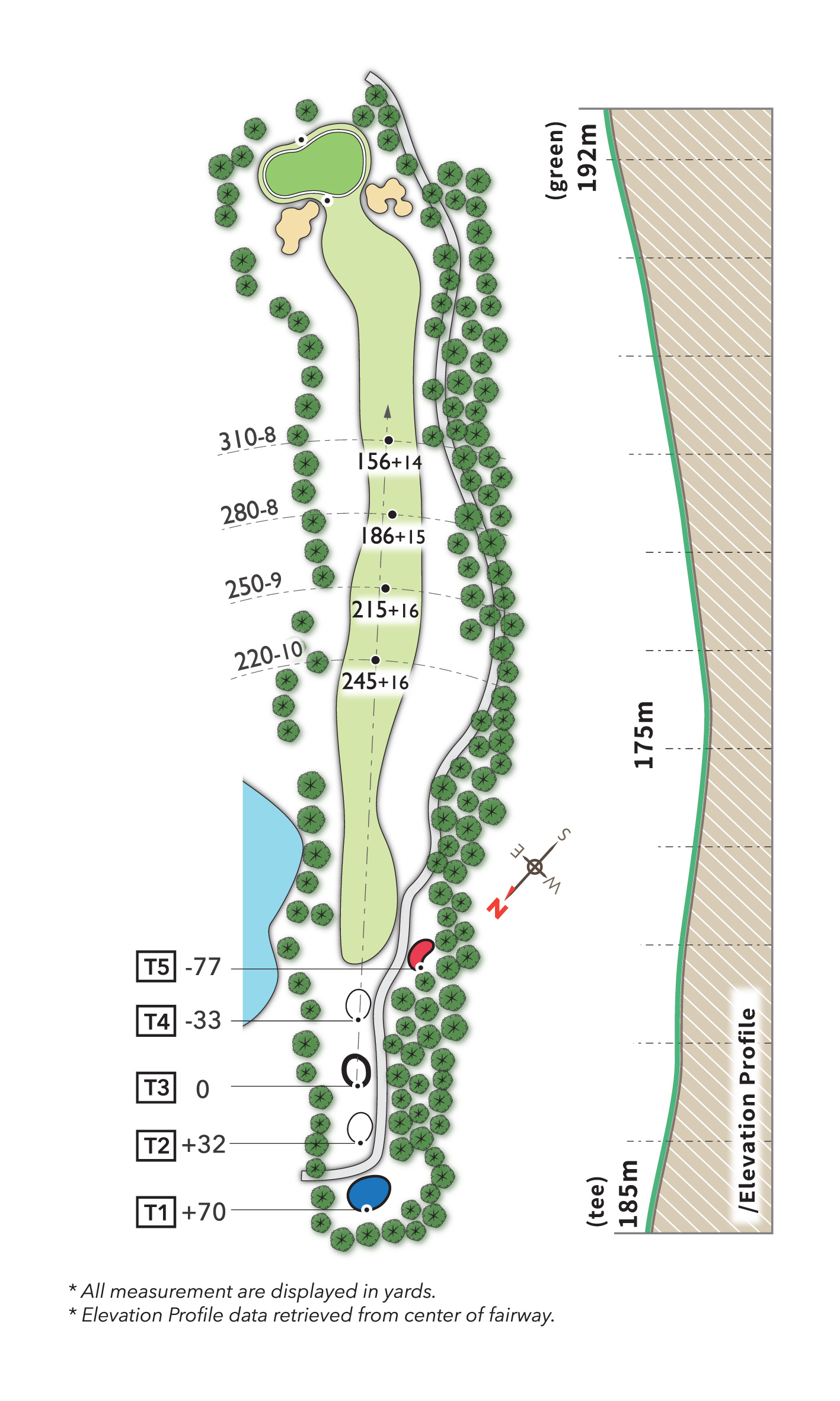
No.7
A five-par hole that goes straight up and down, with a large downhill tee shot. The fairway slopes from high on the left to low on the right. Aim your tee shot towards the middle-left side to get a better angle for approaching the green. The second shot is uphill, requiring about 15 yards more. The green is the largest on the course, with a width of 62 yards. When attacking with the second shot, placing the ball in front of the green is a good strategy. If you plan to reach the green in three shots, leave about 100 yards for the third shot.
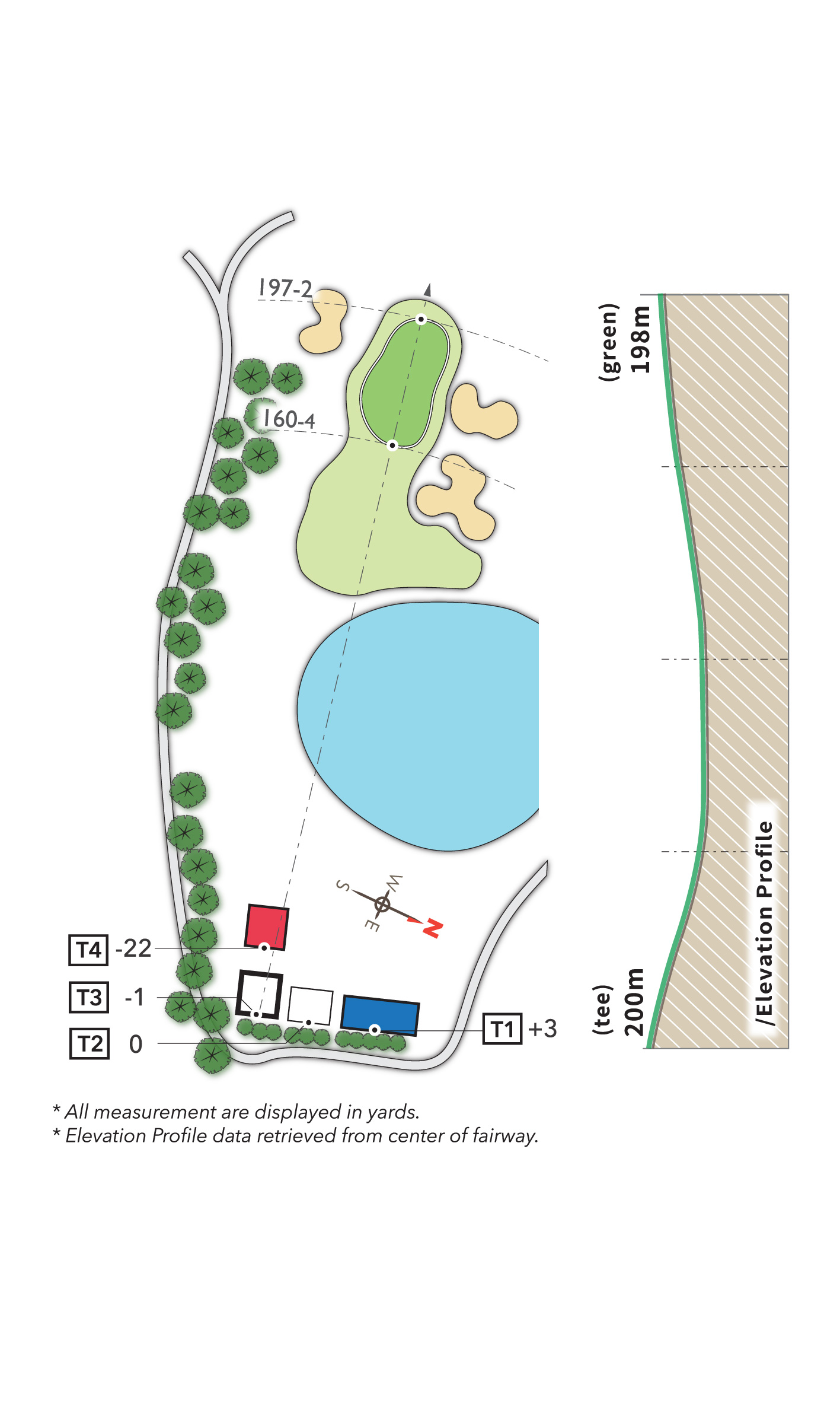
No.8
The tee box is higher than the green, but the landing area is on an uphill slope, which helps the ball stop more easily. The green is about 37 yards deep, and distance control is crucial for club selection. Once the distance is confirmed, hit as usual without extra power; the main strategy remains to play short rather than long. When facing a crosswind from the right, adjust your aim but avoid going beyond the right edge of the green.
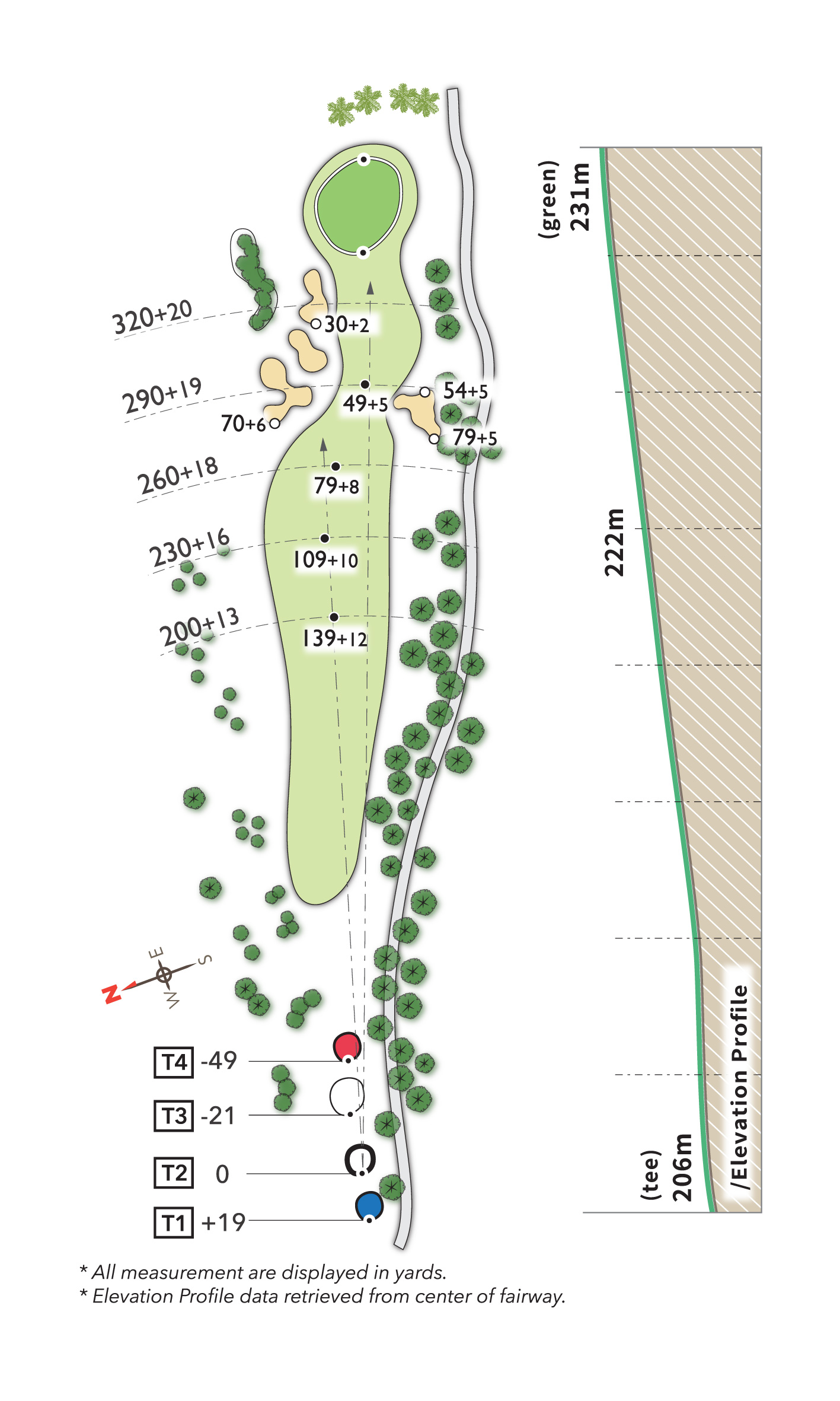
No.9
A very wide short four-par hole, with the 18th hole fairway on the left, making the actual playable width even larger. You can confidently hit full strength off the tee, with no out-of-bounds on either side. If your drive exceeds 280 yards, you can reach the platform; the second shot is about 100 yards remaining. The approach to the green is uphill, adding about 10 yards. The green slopes from front to back and has a noticeable incline, so avoid going past the flagstick.
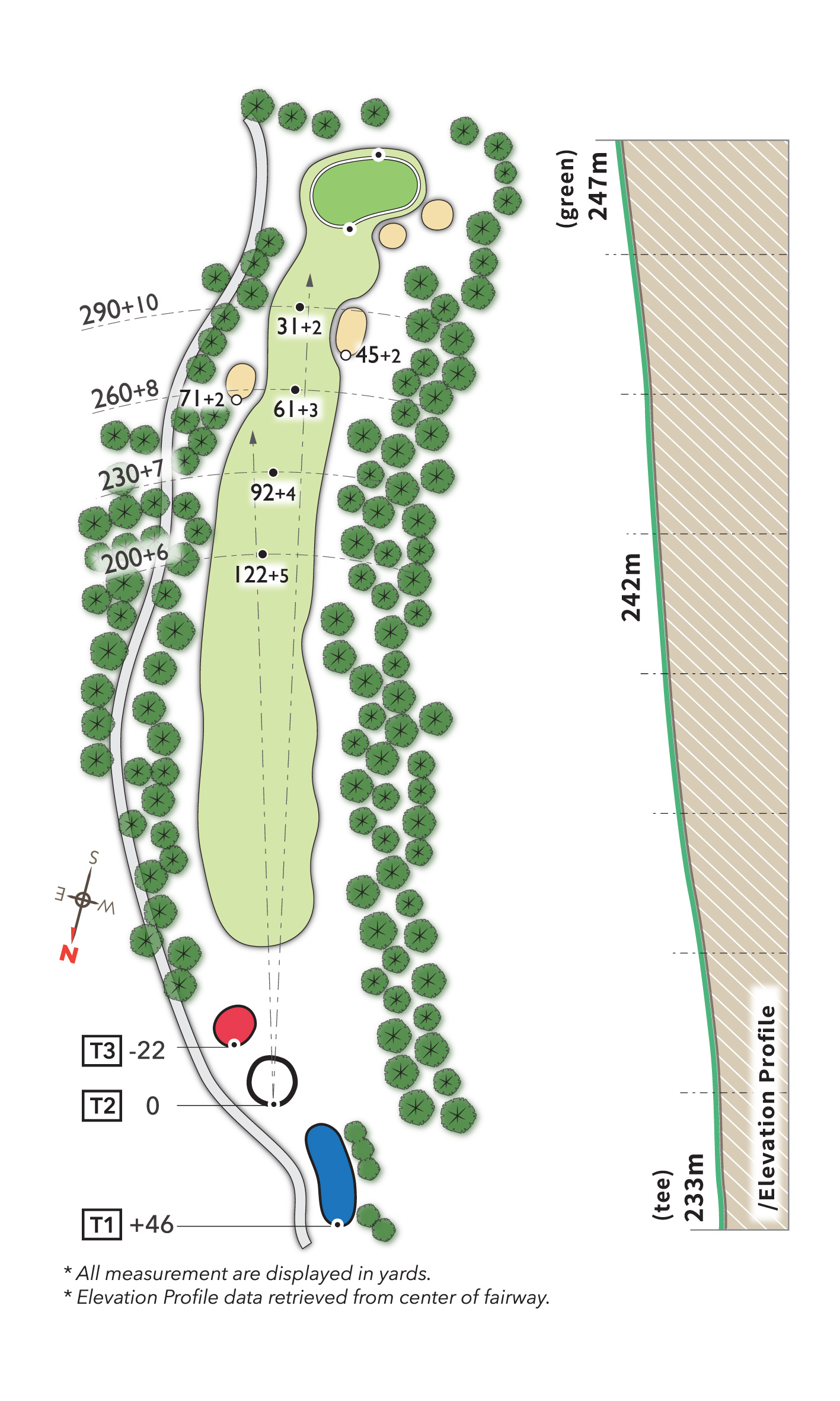
No.10
A short four-par hole that slightly curves to the right, not very long but uphill all the way. On both sides of the fairway, there are bunkers. Use a 3-wood or driver for the tee shot, aiming for the left side of the fairway to hit a draw. The second shot is within about 100 yards. The green is slightly elevated, but no extra distance is needed when approaching.
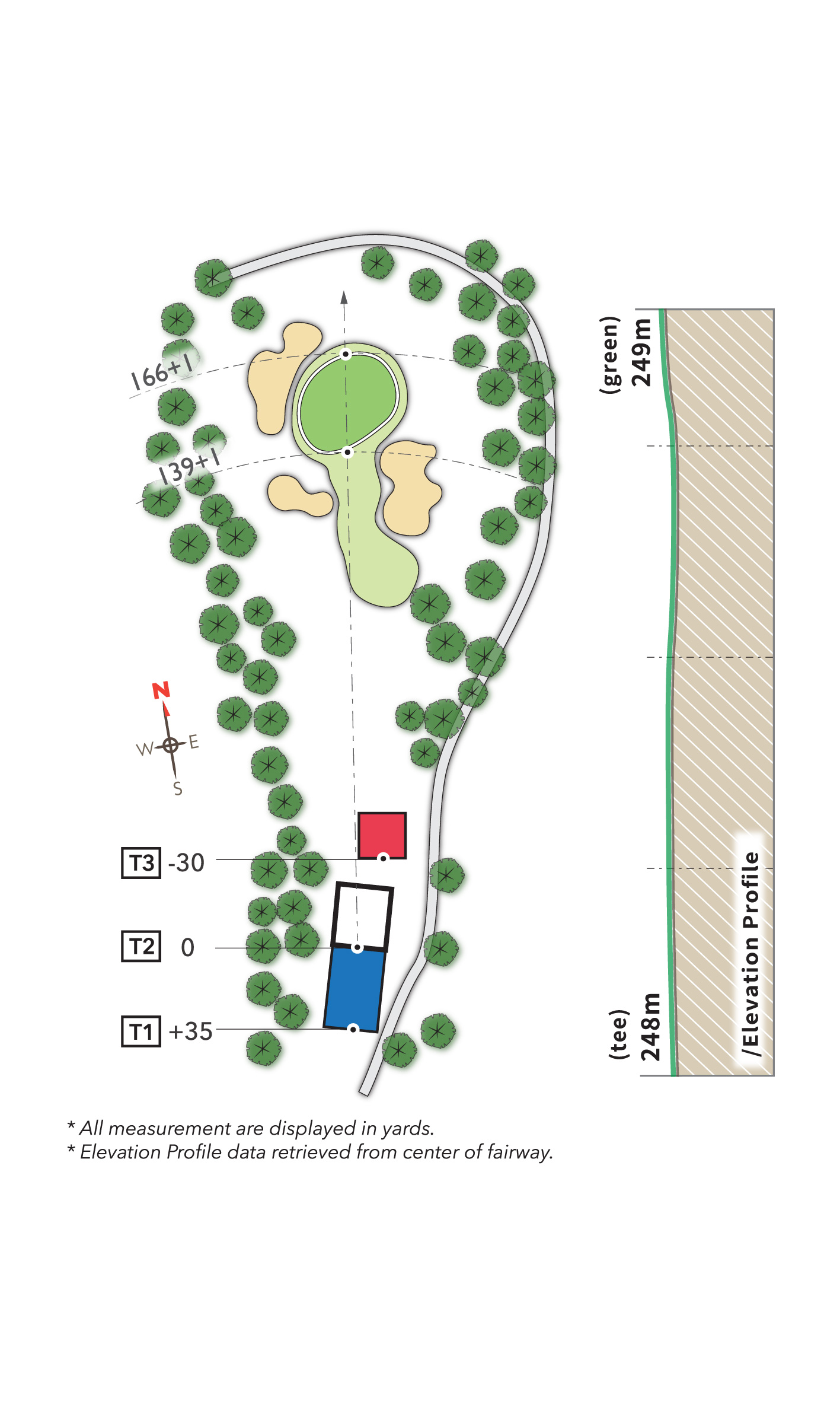
No.11
When the flag is on the right side, the right-side bunker is easier to target. Following the principle of not overhitting, no extra distance is needed unless there is a headwind. For attacking the flag, aim for the wider side of the green first, then use the ball’s curvature to approach the flag, for example, aiming left and hitting a draw if the flag is on the right.
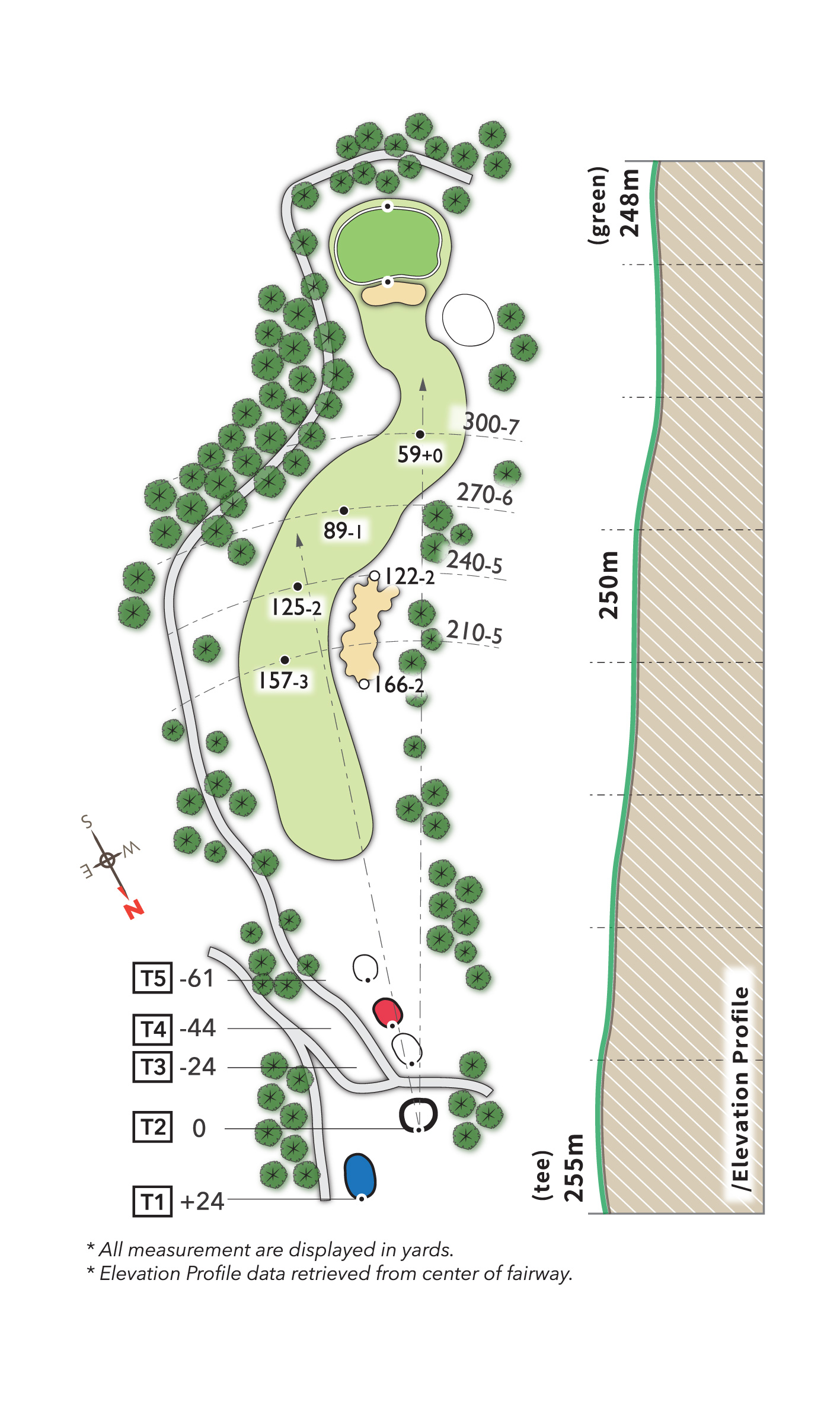
No.12
The fairway is designed in an S-shape, but from the new professional tee, the strategy leans towards a dogleg left. The tee shot from the white tee is angled around a bunker at about 270 yards, with trees on the right. A drive of about 270 yards can clear the obstacle, leaving approximately 50 yards for a short approach to the green. When facing the flag, use a bump-and-run shot to let the ball roll onto the green naturally. If the flag is at the back, a high shot is recommended, leaving about 7 yards of roll to stop the ball near the flag.
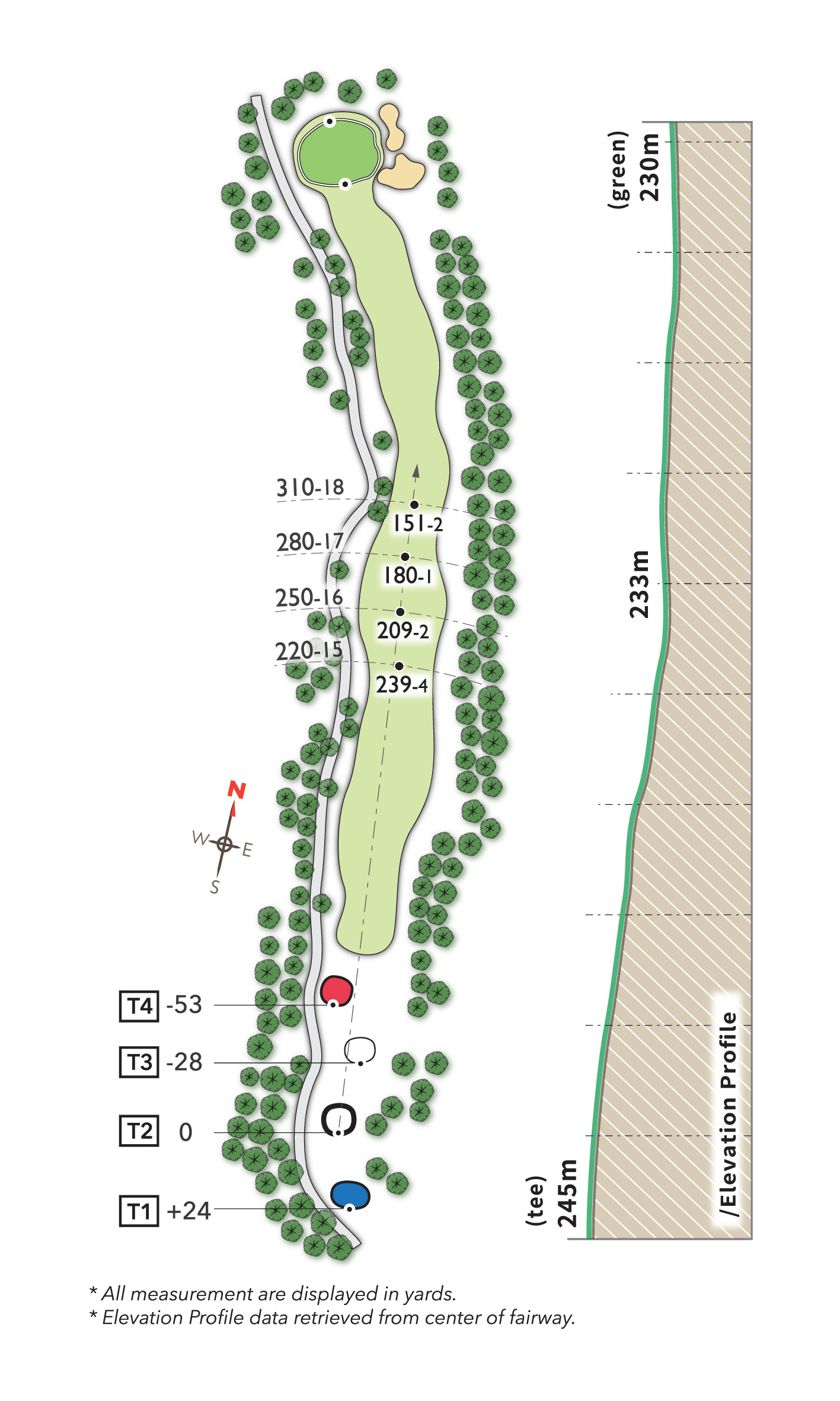
No.13
A short five-par hole, one of the key scoring holes on the back nine. The fairway is divided into upper and lower levels, higher on the right and lower on the left. The tee shot should be played from the higher right side to get a better angle for a direct approach to the green. If the ball lands on the lower left side, it may be obstructed by trees. The green slopes on both sides, so if you cannot reach in two shots, aim for the right front of the green to leave an uphill chip. When the flag is on the left, avoid mistakes that could lead to the left side.
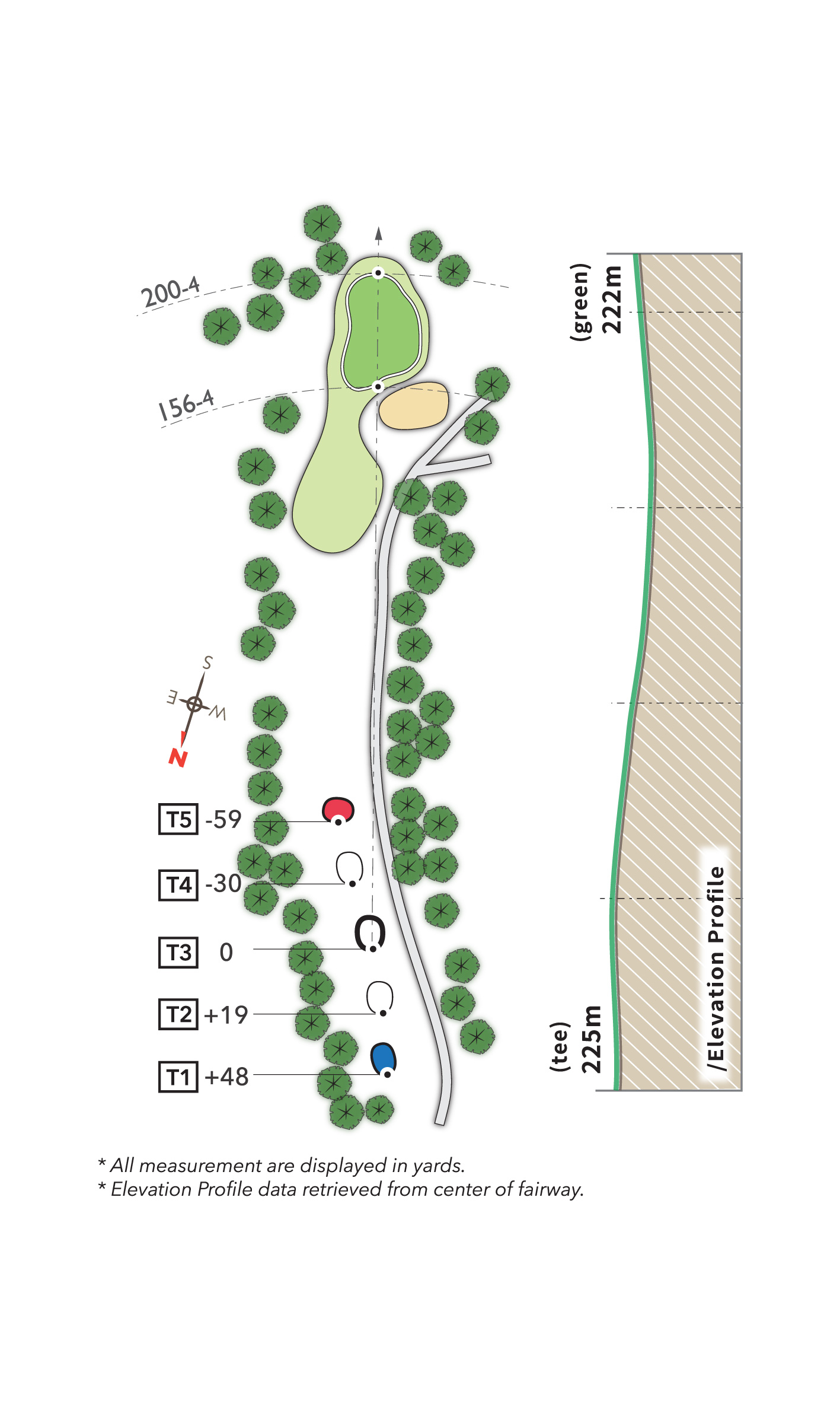
No.14
A downhill, three-par hole, about 10 yards shorter than usual. The right half of the green is guarded by a bunker, so aim for a draw into the right side of the green. Regardless of whether the flag is on the left or right, the strategy is to aim for the left half of the green, as it slopes from left to right, causing the ball to roll naturally to the right after landing. If the flag is on the left, you can typically leave an uphill putt; if on the right, the ball may roll close to the flag.
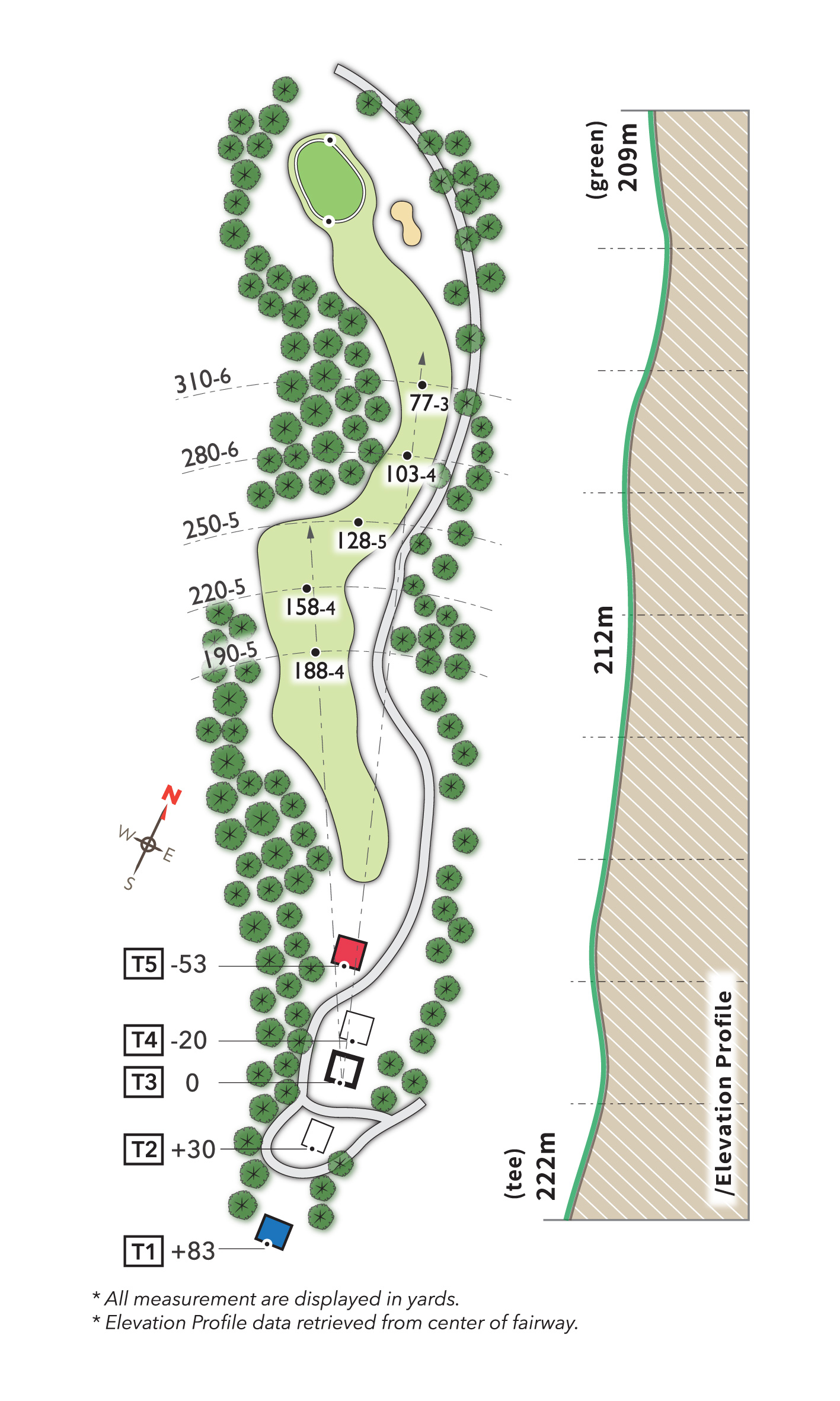
No.15
Starting from the white tee, the fairway ends about 255 yards ahead, beyond which is a valley separating from the green. For the tee shot, use a hybrid or 3-wood, aiming for the wider landing area on the left side of the fairway, avoiding the front boundary wall, which could affect the launch angle of the second shot. Since the second shot is downhill, you can reduce the distance by about 5 yards. The green slopes from high on the left to low on the right, with out-of-bounds on the left. The main target for attacking the flag should be on the right side of the green.
No.16
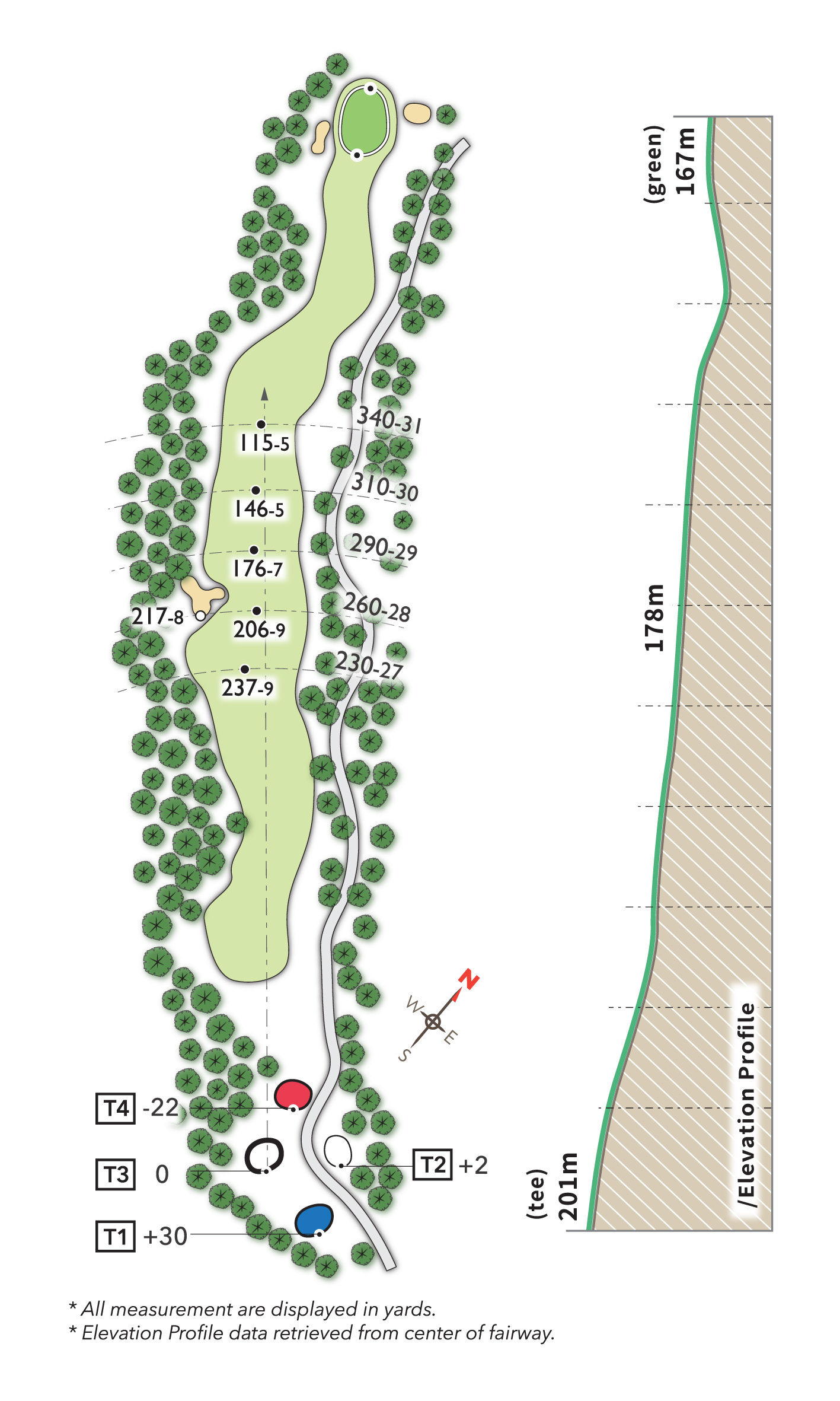
A long downhill hole with a very wide fairway, a prime scoring opportunity. The left side is out of bounds, and there is a bunker about 270 yards on the left. Use the downhill slope to add distance but be careful to avoid going left. The second shot is about 195–215 yards, and since it’s downhill to the green, reduce the distance by 5–10 yards. When approaching the green, aim for the right half, as the left and back sides are out of bounds. Play it safe and aim for the main landing zone.
No.17
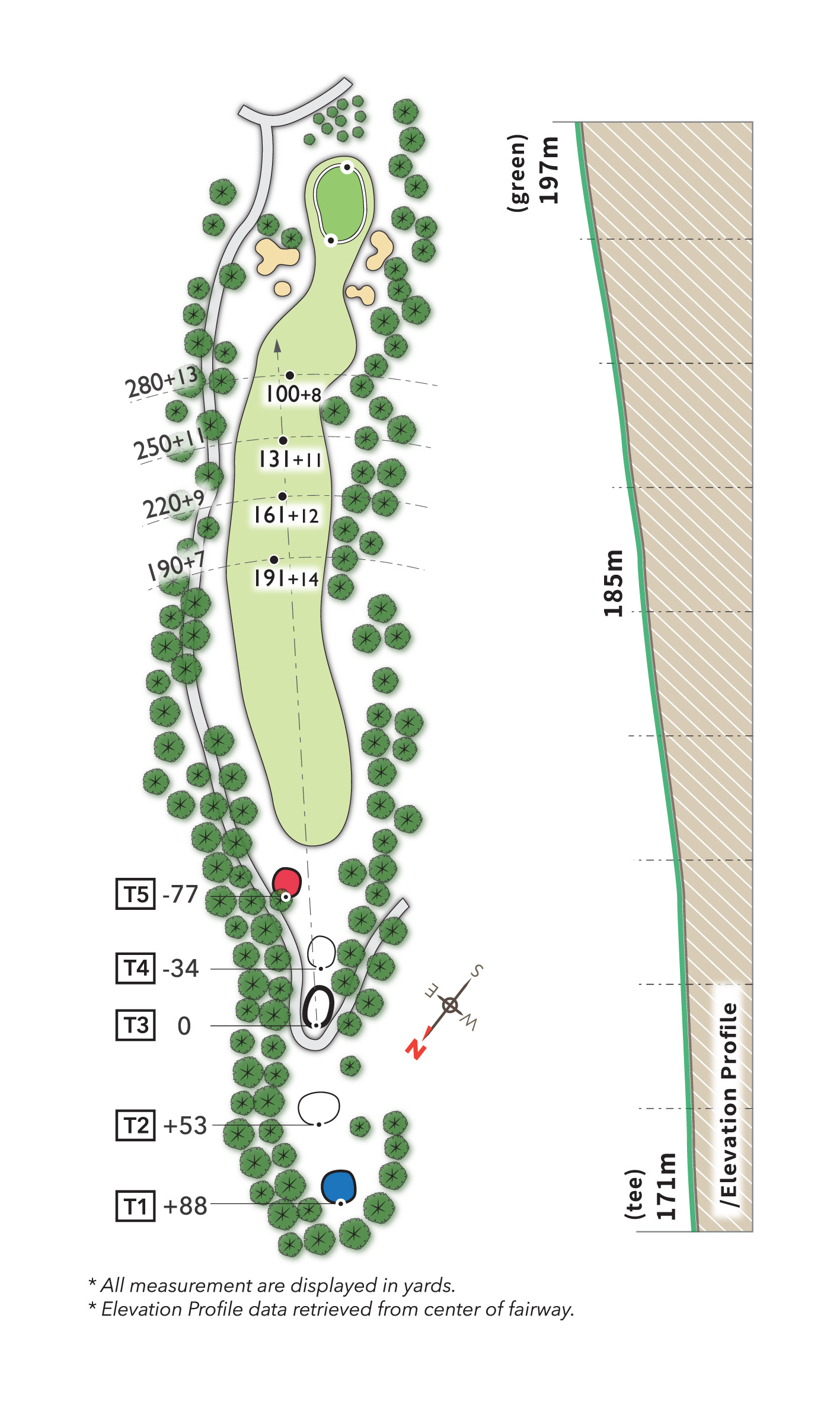
A long uphill four-par hole. If you tee off from the bottom tee, the distance will be longer and the shot more to the right, making it one of the most difficult holes on the course. Regardless of which tee you use, aim your drive towards the right half of the fairway for a better attacking angle. The second shot is about 150–180 yards, uphill, so add about 10–15 yards. When attacking the green, avoid going past the flag; keep the ball below the flag for uphill putts or chips.
No.18
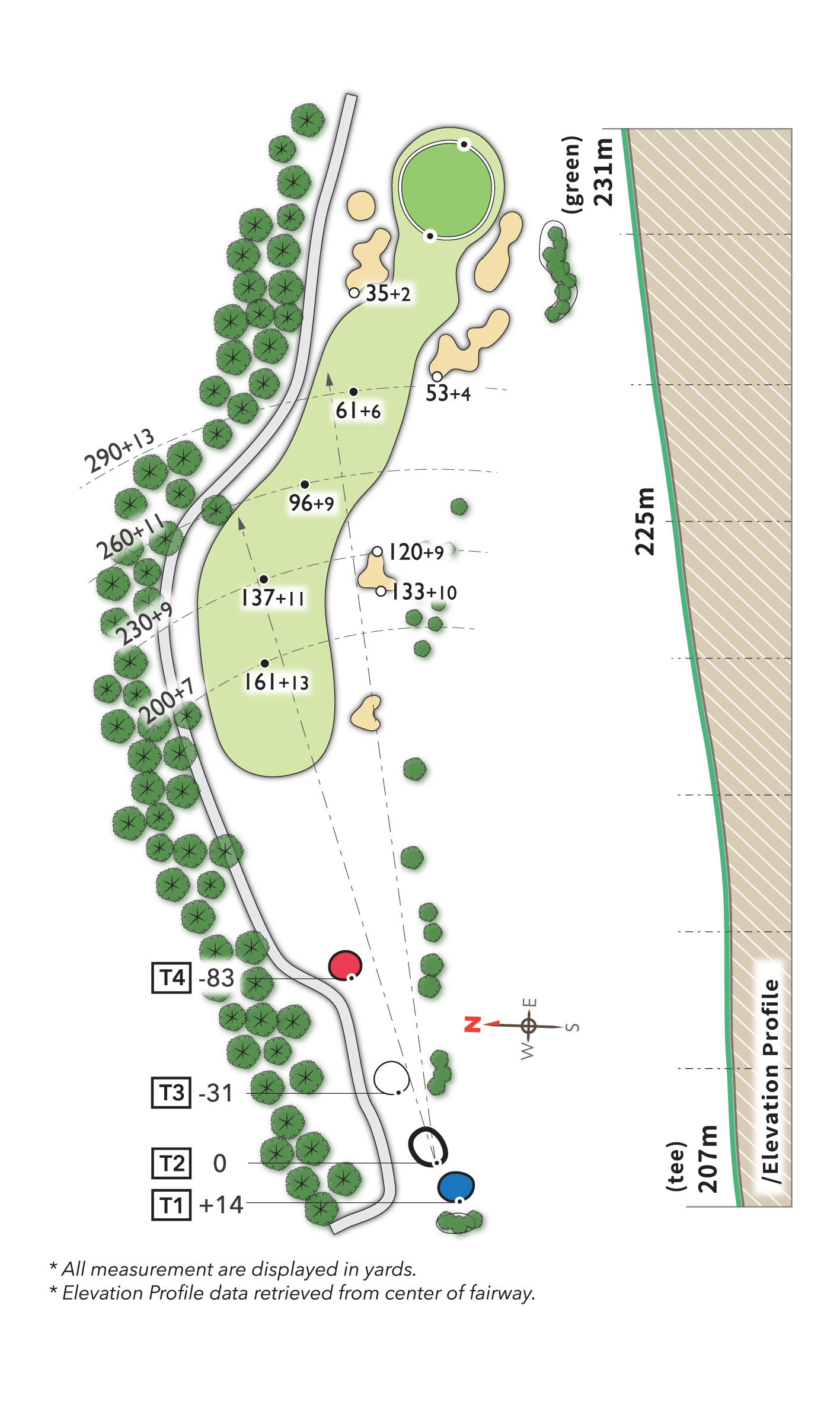
The 18th is a dogleg to the right. You can choose to aim for the left side of the fairway platform or clear the last bunker on the right, which requires about 254 yards of carry. The second shot is around 120 yards. Bunkers guard both sides of the green. The approach is uphill, so add about 10 yards for safety. Be sure to avoid going past the flag, as this will leave a fast downhill putt.
V. Practice Range Introduction
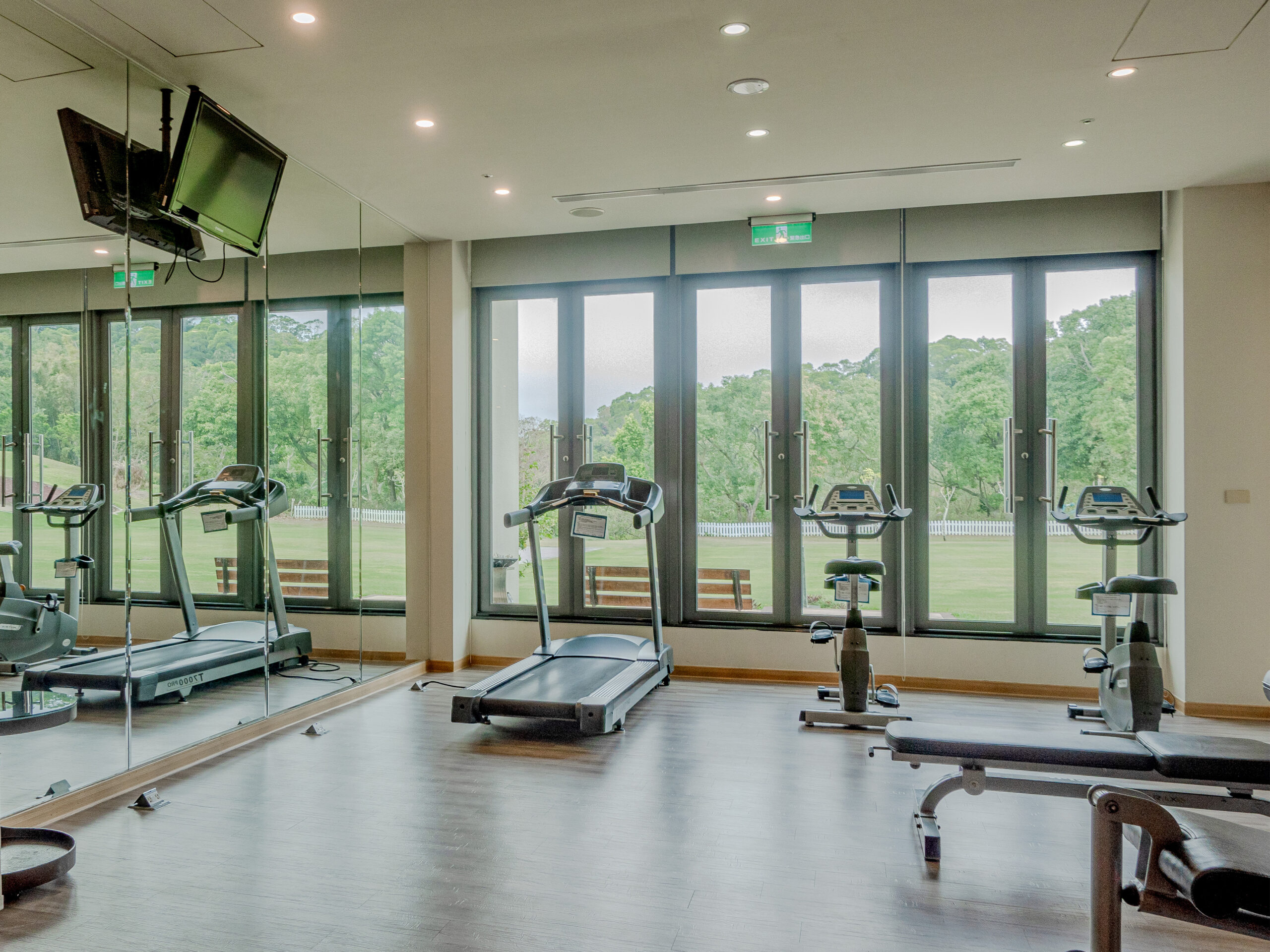
Fitness Center
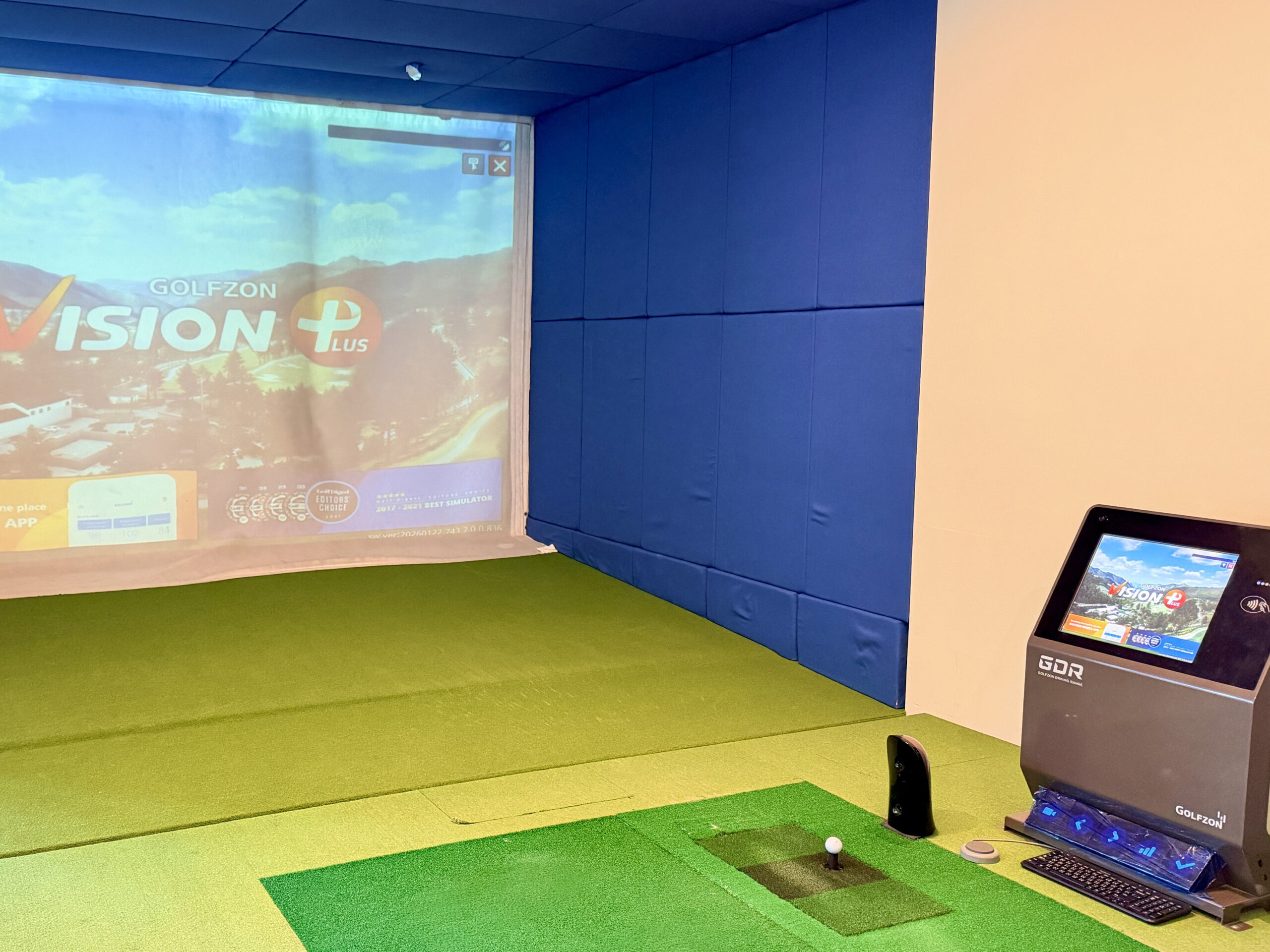
Simulator
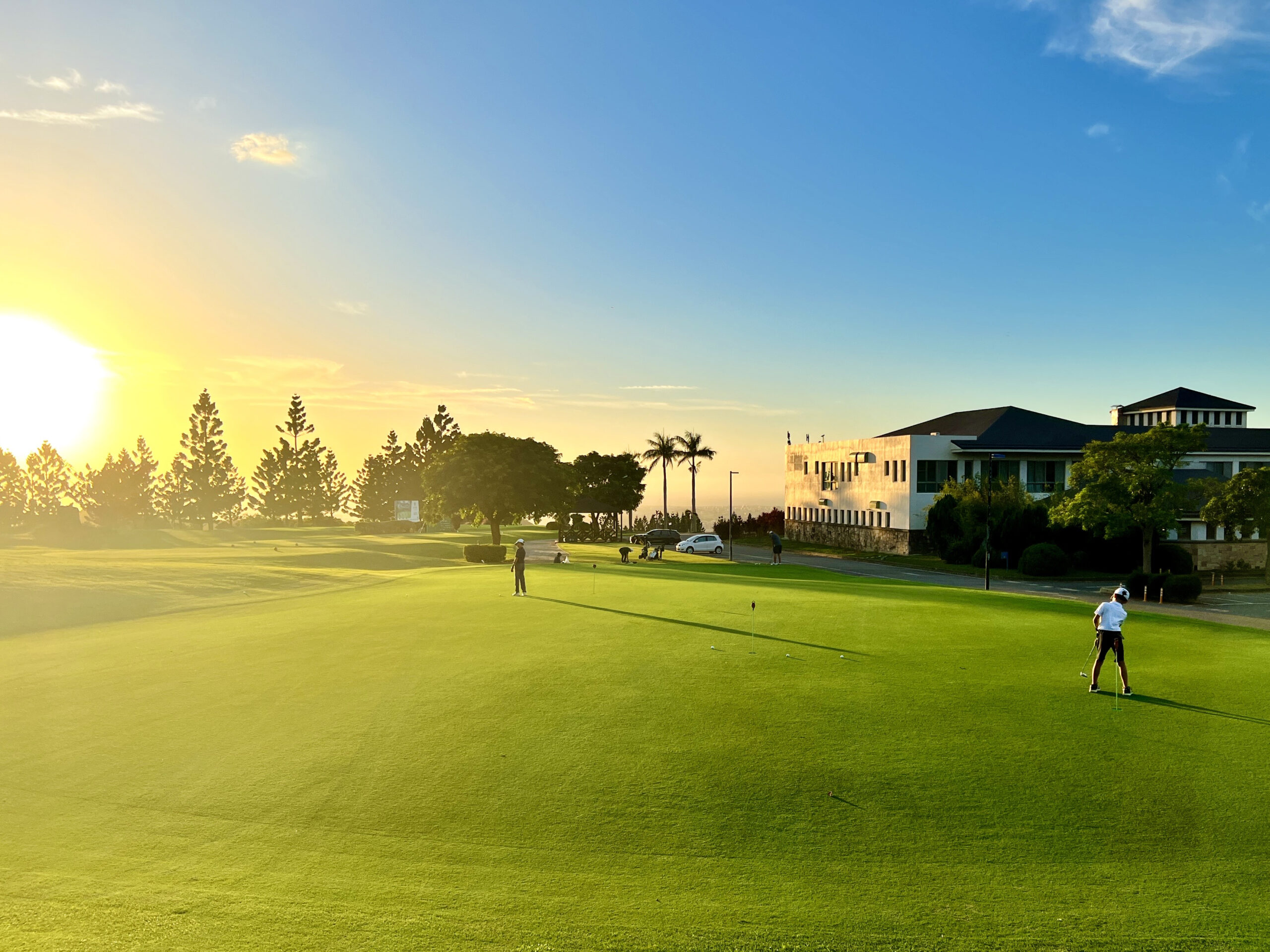
Puan Practice Green
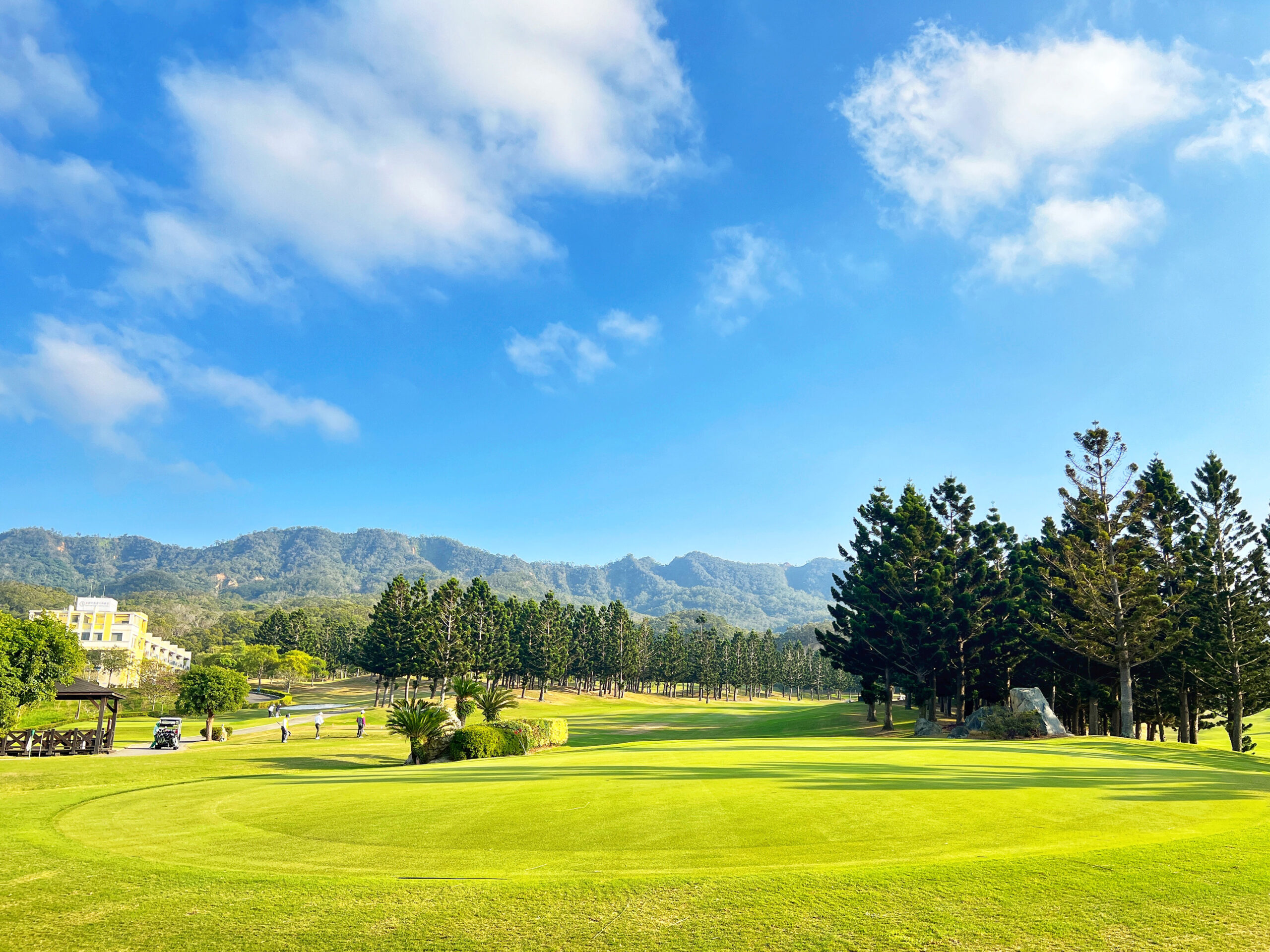
Practice Green on Hole 10
Second Course Practice Green
Sixth, Mutual Alliance Golf Course (ONE GOLF)
Seven, Reservation and Play Rules (Must Read)
1. Please follow golf etiquette and wear appropriate sportswear.
2. Check-in 30 minutes before tee-off, arrive at the starting point 10 minutes early to prepare for departure.
3. Follow the principle of 'slow play, quick walk', avoid congestion during play, complete 18 holes within 4 hours and 30 minutes.
4. Teams should submit attendance lists three days in advance, and provide tee time and rooming lists the day before play.
5. When reservations are full on the day, unreserved players will not be allowed to play. Late arrivals will be scheduled for the next available slot at the tee.
6. Additional groups added on the day must be confirmed based on current reservations and play conditions.
7. Players who start but do not complete 18 holes must pay full green fee and club rental. Weekday early bird 9-hole packages are excluded.
8. Weekend play requires at least three players; players with fewer than three must join a group arranged at the starting point before playing.
9. If using coupons or credit card discounts, present them at check-in. Changes cannot be made after play begins.
10. If using a golf voucher, fax the voucher list to the course the day before; same-day acceptance or changes are not available.
11. Drone use is prohibited: Without course approval, personnel (including players and caddies) are not allowed to use any drone equipment to ensure safety and privacy.
12. Photography requires consent: Influencers or content creators must obtain course approval before filming or producing related media on the course.
13. Control volume when using sound equipment: Players bringing their own sound devices should monitor volume levels to avoid disturbance and maintain quality and environment.
14. No pets allowed on the course: Players and caddies are prohibited from bringing pets to prevent accidents and injuries.